|
Getting your Trinity Audio player ready...
|
March 6, 2026.
A Reception That Set the Tone
Activate began with a two-hour Welcome Reception at the Allē Lounge on 66 at Resort World, Las Vegas, sponsored by Temple View. And while it was officially scheduled for two hours, the conversations didn’t respect the clock. The networking simply refused to slow down.
That was the first signal.


Capital sources reconnecting. Brokers, Lenders, Service Providers, all the industry together expanding relationships. Real conversations about what’s working — and what’s no longer working — in private lending.


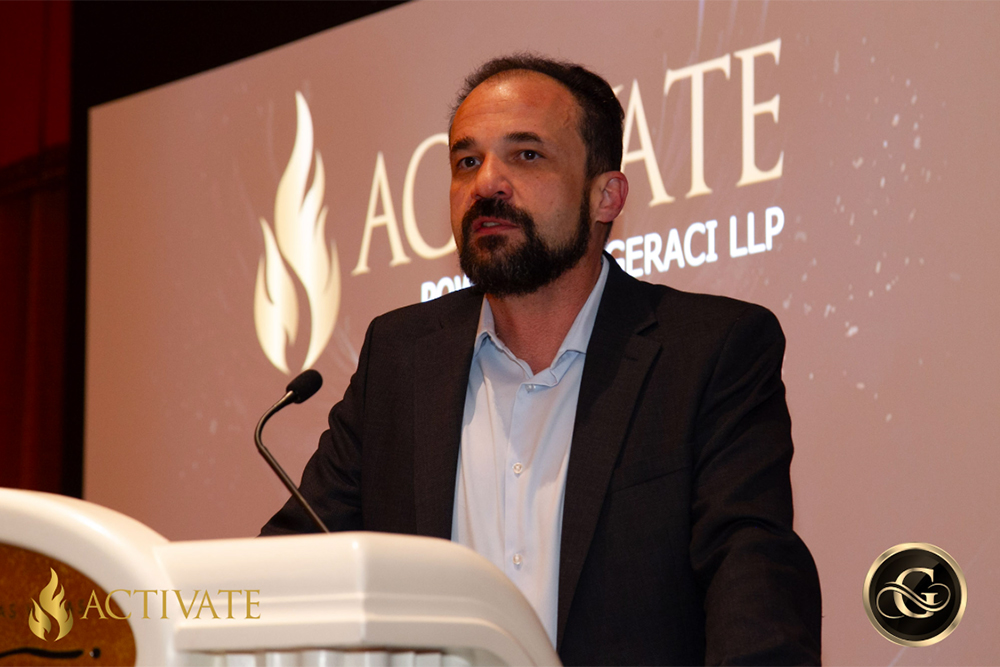
Anthony Geraci not only welcomed the room — he worked it. You could see him moving between groups, introducing participants to one another, connecting lenders with brokers and operators with capital sources. He wasn’t just hosting an event; he was doing what he does best — building bridges.
And in many ways, that set the tone for everything that followed.


But beyond the conversations, the strategy, and the networking, there was something else in the room: people were having a great time. The energy was relaxed, the laughter constant, and the photos from the evening make it clear — this industry knows how to work hard, but it also knows how to enjoy the moment together.


Three Tracks, One Ecosystem
If Elevate was about vision, Activate was about execution.
The structure of the event made that clear from the start. Instead of placing every conversation in the same room, Activate was designed around three dedicated tracks that reflect the real structure of today’s private lending industry:
- Broker Track
- Balance Sheet Lender Track
- Securitizer Track
Each track addressed a different piece of the ecosystem. Brokers focused on deal flow and business building. Balance sheet lenders examined operations, capital strategy, and platform scalability. Securitizers explored institutional capital markets and structured finance.
The result was a conference where attendees could dive deeply into the part of the industry that most directly impacts their business.
The only challenge?
For many of us, we wanted to attend all of them.
Fortunately, moving between rooms and speaking with participants allowed us to capture a number of key insights from the panels across the three tracks.
The Balance Sheet Lender Track: Building Durable Lending Platforms
The Balance Sheet Lender Track focused on the operational and financial infrastructure required to build scalable lending platforms.

The morning began with “Revenue Reloaded: Strategies for Bridge and DSCR Lending,” featuring Jennifer McGuinness (Pivot Financial), Jeff Tesch (RCN Capital), and Steve Trowern (Temple View Capital). The panel explored how lenders refine loan profitability through disciplined underwriting, creative structuring, and strong broker relationships.

Operational infrastructure took center stage in “Building Smarter Funds: Structures, Compliance, and the Tech-Enabled Back Office,” with David Rosenberg (FUTURES Financial), Matthew Zonies (Bluestone Commercial Capital), Nicholas Blonski (Armanino), Kaene Soto (Geraci LLP), and Joshua Nevarez (Armanino). The discussion highlighted how modern lending funds rely on strong compliance frameworks, reporting systems, and technology to maintain investor confidence while scaling operations.


The conversation then turned toward strategic decision-making in “Riches and Niches: Knowing What Can—and Can’t—Be Optimized.” Panelists Richard Katz (Rodeo Lending), Jon Hornik (LHR&G Private Lender Law), Marcus Carter (La Mesa Fund Control and Escrow / Construction Risk Mitigation Services), Liam Leonard (Lionscore), Thayne Boren (Sekady), and Romney Navarro (Ragland Navarro Capital) explored how lenders balance data-driven models with experience and judgment when identifying profitable lending opportunities.

Capital formation was the focus of “Fueling the Balance Sheet: Modern Capital Strategies for Scalable Lending,” with Sanjay Patel (Nomura Securities International), Matt Burk (Verivest), Aaron Metaj (Lima One), Shawna Phelan (SDC Capital), and Kendra Rommel (FUTURES Financial) discussing how lenders structure capital stacks, negotiate warehouse facilities, and prepare for institutional expansion.


The track concluded with “The Hidden Risks of Servicing: Compliance, Controls, and the Cost of Getting It Wrong,” featuring Enrique Flores (Servicing Pros Inc.), Kaene Soto (Geraci LLP), Nate Cater (PHOCIS Tech), Casey Reichel (Sage Credit Income Fund), and Nathan Goodhart (The Mortgage Office). The panel highlighted how servicing, often underestimated, carries significant regulatory and operational risk if not managed properly.


The Broker Track: Turning Deal Flow into Scalable Businesses
The Broker Track addressed the role brokers play as the originators of opportunity within the private lending ecosystem.

The day opened with “Instant Leverage: Become the Lender Overnight,” where Mark McCormick (Lido Private Credit), Valerie Saunders (NAMB), James Baisley (Temple View), and Josh Stech (Sundae) explored how brokers can expand their role through table funding and correspondent lending models.

Deal sourcing and lender relationships were the focus of “Maximizing Deal Flow: Navigating Balance Sheets and Securitizers,” with Peter Steigleder (HypoCap LFS), Dana Georgiou (Lending Luminary), Jeremy Adrian (Crown Capital Resources), Sam Chivitchian (Secured Capital Lending / SCL Funding), and Avalon McLeod (Alba Capital Advisory) discussing how brokers position deals across different lender models.


Later in the day, Adonis Lockett (Smart Money Blueprint) led two sessions focused on broker growth. In “Conventional to Private Money Broker,” he explored how professionals transition into private lending brokerage. In “Starting Your Own Lending Business,” he discussed the operational mindset and structure required to build a sustainable brokerage platform.

Across these sessions, the message was clear: the most successful brokers today are not just closing deals — they are building structured businesses designed for scale.
The Securitizer Track: Connecting Private Lending with Institutional Capital
The Securitizer Track explored how private lending platforms connect with institutional capital markets and structured finance.

The day began with “Wholesale vs. Retail: Choosing Your Pipeline Strategy,” featuring Doug Roberts (IceCap Group), Brian O’Shaughnessy (ARDRI), Ketan Parekh (Toorak Capital Partners), Jan Brzeski (Sage Credit Investment Partners), and Brendan Boyle (Temple View Capital). The panel explored how securitized lenders decide between building retail origination channels or leveraging wholesale broker networks.

Capital diversification was the focus of “Beyond Securitization: Building Forward Flow Agreements and Strategic Partnerships,” where Jen Press (RiskSpan), Frank Shiau (Pretium), Jennifer McGuinness (Pivot Financial), and Steve Trowern (Temple View Capital) examined how lenders expand liquidity through forward flow agreements and institutional partnerships.


Institutional market mechanics took center stage in “Inside Rated RTL Issuance: Building Blocks of Institutional Capital,” with Aleksandra Simanovsky (Adige Advisory), John Beacham (Toorak Capital Partners), Ketan Parekh (Toorak Capital Partners), Rick Sharga (CJ Patrick Company), and Corina Gonzalez (Morningstar DBRS) discussing the structure and investor demand behind rated residential transition loan securitizations.


One of the most anticipated conversations came during the Fireside Chat: Building, Scaling, and Evolving in Private Lending, featuring Anthony Geraci (Geraci LLP), Josh Stech (Sundae), and Dave Stech, reflecting on how private lending platforms evolve from entrepreneurial operations into institutional businesses.


The track concluded with “Regulatory Crosswinds: Shaping the Future of Securitization,” where Doug Roberts (IceCap Group), Jeff Tesch (RCN Capital), Ike Suri (FundingShield), and Mark Branton (Morningstar DBRS) examined how regulatory developments and rating agency frameworks are shaping the future of securitized lending.
One Industry, Three Perspectives


What Activate demonstrated clearly is that private lending has matured into a complex ecosystem.
Brokers generate the opportunities.
Balance sheet lenders structure and fund the loans.
Securitization connects those loans to institutional capital markets.
Each track explored a different part of that system.
Together, they told the story of an industry that continues to evolve — not only in scale, but also in sophistication.
And if the only challenge was choosing which room to sit in, that may be the best sign of all.