|
Getting your Trinity Audio player ready...
|
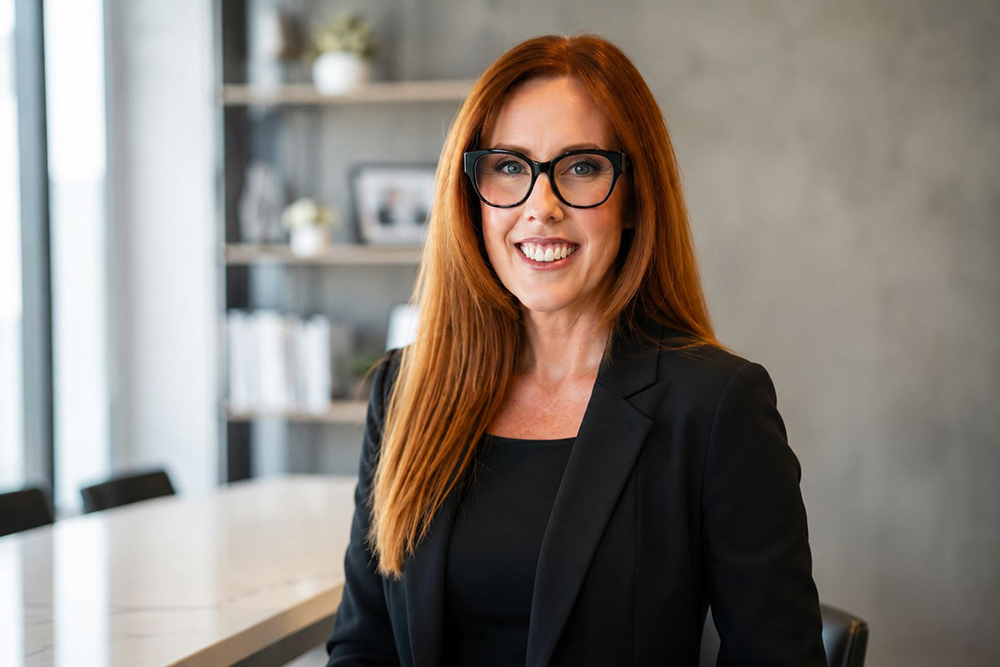
Long before becoming one of the leading executives behind Constructive Capital — a top private lender originating approximately $2.5 billion in annual loan volume — Megan Castleton learned how to fight. Literally.
Before the awards, before the executive meetings, before helping scale one of the most respected lending platforms in the country, Megan was a young woman working at a bagel shop in Huntington Beach after walking away from a water polo scholarship and trying to figure out what her future would look like.
At the same time she was learning the mortgage business from the ground up, she was also stepping into boxing gyms, training, competing, and developing the mindset that would later define her career: resilience, adaptability, discipline, and the ability to keep moving forward under pressure.
Today, Megan serves as Chief Credit Officer at Constructive Capital, where she plays a central role in credit strategy, operational innovation, correspondent lending initiatives, and the company’s continued growth toward its ambitious long-term vision. Her career has earned national recognition, including being named one of the most powerful women in mortgage finance, along with recent recognition at The RED Awards in New York.
But stories like Megan’s are often misunderstood.
From the outside, careers at this level can appear linear — as if success was always part of the plan. As if leaders are born confident, certain, and prepared for every stage of the journey.
But nobody is.
And Megan’s story is a powerful reminder that behind every success story, there are challenges nobody sees: self-doubt, market collapses, career reinventions, financial uncertainty, motherhood, leadership pressure, and the constant need to adapt inside one of the most demanding industries in finance.
At different moments in her life, Megan faced the collapse of the mortgage market, periods where opportunities nearly disappeared, and even the internal fear of never feeling “good enough” despite years of achievement and experience.
And yet, every challenge became part of the foundation that would eventually make her one of the most respected operational and credit minds in private lending today.
In this conversation with The Elite Officer, Megan Castleton opens up about the unconventional road that shaped her career, the lessons she learned from fighting both inside and outside the ring, and why adaptability may be the single most important skill for long-term success in lending.
Uriel Fleicher: Since joining Constructive Capital in December 2024, you’ve been recognized by a national mortgage publication as one of the 50 most powerful women in mortgage finance, and were recently honored at The 2026 RED Awards in New York — incredibly impressive.

How does this moment feel for you, both personally and professionally, especially after everything you’ve gone through to get here?
Megan Castleton: It’s honestly a tremendous honor, but it still feels a little surreal to me because I never really thought about my career through awards or recognition. For most of my career, I was the person in the background. Operations people are trained to make everybody else look good. So being recognized as one of the 50 most powerful women in mortgage finance, and then receiving recognition again at The RED Awards in New York, was very emotional for me.

But I also know none of this happens alone. There’s no way I’m standing in these moments without the teams that supported me, the mentors that shaped me, and the people that challenged me to grow.
And honestly, joining Constructive Capital changed a lot for me personally, too. Constructive pushed me out of my comfort zone. They wanted me to speak publicly, share ideas, and become more visible in the industry.
So when I look back at where everything started — the bagel shop, boxing, the market crashes, rebuilding multiple times — it’s hard not to feel emotional about the journey.
When the Right Culture Unlocks Your Potential
Uriel Fleicher: Listening to your story, I feel like Constructive Capital didn’t just become another step in your career. It almost sounds like the culture there helped you fully become the leader and public voice you are today.
How important has Constructive’s culture been in your personal and professional growth?
Megan Castleton: I think it’s been incredibly important. Constructive already had a very strong culture when I arrived, which can actually be challenging because you’re entering a business that’s already moving as a machine. So for me, the question became: how do I fit into that culture and help enhance it?
What makes Constructive special is that it’s very collaborative. It’s very much a group effort. We genuinely listen to the people doing the work every single day, and that’s not something you see in every company.

Ben (Fertig, President) has always supported this idea that no voice is too small and no one is more important than the next person. There’s a level of transparency and accountability here that really pushes everyone to grow, including leadership.

So I think it became both things at the same time: I hope I helped strengthen the culture with the experience and systems I brought to the table, but the culture here also made me a better leader and a better version of myself professionally.

Self-Doubt, Survival, and Reinvention
Uriel Fleicher: When people see successful executives, awards, growth, and leadership positions, they usually only see the final result. But was there ever a moment in your career when things truly felt uncertain — when you questioned the future or even yourself? And what helped you keep moving forward?
Megan Castleton: Absolutely. There were multiple moments like that.
The biggest one was probably during the financial crisis. The entire industry basically stopped overnight. Suddenly, everything I had built my career around disappeared, and people looked at anyone connected to mortgage lending like they were responsible for ruining the world.
I was in my mid-to-late twenties and couldn’t even get a job at a grocery store. Everything I had done up to that point suddenly felt like it didn’t matter anymore.
So I adapted. I started cocktail waitressing at night while working on loan modifications during the day alongside an attorney. And honestly, that period taught me a lot about survival, consistency, and adaptability.
“You can use challenges as excuses why you can’t… or you can keep pushing forward.” — Megan Castleton
But professionally, one of the biggest challenges was always internal too. I never really felt good enough. I didn’t have the degrees. I didn’t come from the traditional background people expected. So there was always that voice asking, “Can I really do this? Do I belong here?”
What helped me push through was realizing that growth comes from being uncomfortable. That’s something boxing taught me early. You learn how to function under pressure. You learn how to keep moving even when things feel uncertain.
And over time, I realized something very important: if you know how to learn, you can figure almost anything out.
That mindset changed everything for me.
Discovering the Ability to Build Businesses
Uriel Fleicher: At some point, your career seems to shift from simply working inside mortgage companies to actually helping build and structure businesses. Not just underwriting loans, but creating systems, processes, and operational strategy.
Was there a moment when you realized your value wasn’t only in production or credit — but in your ability to build platforms and help companies grow?
Megan Castleton: Yes, absolutely. I think that realization really started happening when I moved deeper into private lending and institutional capital started entering the space.
When I first came back into private lending, everything was extremely manual. There weren’t a lot of systems, there weren’t a lot of institutional processes, and a lot of businesses were still operating off spreadsheets and relationships alone.
Coming from more institutional mortgage environments, I started realizing that a lot of the things I had learned over the years could actually help structure and scale these businesses. I could see where processes were breaking down. I could see where they were losing time, where risk wasn’t clearly defined, or where systems needed to be built.
That’s really when I started understanding that I was good at operationalizing credit and building processes around it.
At Apollo Square, for example, I was employee number three. We were building systems, processes, operational workflows — really trying to create something scalable. And then throughout different companies after that, whether it was jumbo products, non-QM, warehouse relationships, or underwriting platforms, I kept finding myself in the same role: building structure where structure didn’t yet exist.
Eventually, I realized I didn’t want to do that for just one company anymore.
I started thinking more holistically about my career and what I wanted long term. And honestly, I also started realizing that maybe I really was good enough to do this at a very high level.
So I launched my consulting business.
And that was a huge turning point for me personally because it forced me to stop hiding behind titles and companies and really trust my own experience, my own knowledge, and the value I could bring to different platforms and leadership teams.

The Vision Behind Constructive Capital’s Growth
Uriel Fleicher: And was that exactly what eventually led you to Constructive Capital?
Because listening to your story, it feels like they didn’t just hire you for a title — they brought you in to help build, structure, and scale the platform for its next stage of growth. What was the vision when you joined, and what are your responsibilities today as Chief Credit Officer?
Megan Castleton: Yes — that was really the attraction for both sides.
Through an industry event in late 2024, I was introduced to Constructive’s President, Ben Fertig, while I was still consulting. We started having conversations around some of the problems emerging in the market — things like insurance costs, DSCR qualification challenges, operational friction, and how private lending needed to evolve technologically.
What immediately stood out to me was that Ben understood exactly what I was talking about. He came from institutional lending, subprime, operations — very similar to my own background. So we were able to have really deep conversations around automation, rules-based underwriting, operational efficiency, and how to scale a platform without losing credit quality.
At the time, I was consulting and helping different companies build systems, programs, and operational workflows. But consulting only lets you touch part of a business. It’s not fully yours. You’re not watching the entire operation evolve from start to finish.

At Constructive, the vision was much bigger.
The opportunity was really about operationalizing credit and helping take an already successful platform to the next level. Constructive had already built an incredible business with very strong credit quality and relationships. The question became: how do we scale that even further through technology, automation, correspondent lending, and operational enhancements while still protecting the quality of the product?
We’re taking a business that was built manually and transforming it into an institutional, technology-driven lending platform.” — Megan Castleton
Today, as Chief Credit Officer, my role touches a lot of different areas. I oversee credit strategy, underwriting philosophy, operational initiatives, correspondent lending programs, and product development. A huge part of my focus is improving efficiency through technology while still preserving the human side of credit decision-making.

We’re working heavily on digital initiatives, AI-driven workflow enhancements, automation, and creating a more streamlined experience both for brokers and internal teams.
And ultimately, the goal is scale. The company is already originating around $2.5 billion annually, but the vision is much larger than that. So a lot of what we’re building today is designed for where the platform is going next, not just where it is now.
The Mindset Required to Survive and Grow
Uriel Fleicher: Right now, many professionals across lending and real estate are going through difficult moments — slower markets, uncertainty, pressure, even questioning themselves professionally.
For someone who may feel stuck today or unsure about their future in this industry, what would you say to them after everything you’ve personally experienced throughout your career?
Megan Castleton: I would say this: everyone is facing some sort of challenge, even if you can’t see it from the outside. I think anything is possible, and I’m proof of that. You can start with no degree, no background, no clear path, and still build a meaningful career if you’re willing to keep learning and keep evolving.
One of the biggest lessons I learned is to stop focusing only on titles or immediate compensation and focus more on experience and growth. Some of the opportunities that shaped my career the most were opportunities I took simply because I knew they would make me better.

I also think it’s incredibly important to find people who challenge you, not only people who agree with you. Growth usually comes from uncomfortable conversations, difficult feedback, and being willing to hear hard things about yourself professionally.
And honestly, adaptability is everything in this industry. Markets change. Technology changes. Products change. The people who survive long term are usually the people willing to evolve instead of staying attached to “the way things have always been done.”
“The people who survive long term are usually the people willing to evolve.” — Megan Castleton
There were moments in my career where I felt completely uncertain about the future. But looking back now, many of those difficult moments ended up becoming the foundation for the next stage of growth.
So I would tell people: don’t let difficult seasons define your future. Stay curious. Keep learning. Keep showing up. And understand that sometimes the challenges you’re facing today are preparing you for opportunities you can’t even see yet.
Uriel Fleicher: After hearing your story, it’s hard not to feel inspired by how much resilience shaped your career. Thank you for being this open with us today.
Megan Castleton: Thank you. I really enjoyed our conversation.