|
Getting your Trinity Audio player ready...
|
July 20, 2026.
The announcement that Figure Technology Solutions entered into an agreement to acquire Kiavi immediately captured the attention of the private lending industry. The transaction brings together what is by far the nation’s leading lender serving residential real estate investors with a company that has spent years building blockchain-based infrastructure designed to modernize how capital moves through financial markets.
To better understand the vision behind the transaction, The Elite Officer, celebrating the publication of its 100th article, sat down with Arvind Mohan. Beyond the acquisition itself, we explore the strategy behind the deal, the leadership decisions that shaped it, and what borrowers, lenders, investors, brokers, and loan officers can expect as the industry enters its next phase of growth.
The Genesis of the Deal
Uriel Fleicher: Arvind, thank you for joining us. It’s a pleasure to have you with us as we celebrate the publication of The Elite Officer’s 100th article.
Arvind Mohan: Thank you, Uriel. And congratulations to you and the entire The Elite Officer team on reaching such an important milestone.
Uriel Fleicher: Acquisitions of this scale are often years in the making, yet the public usually only sees the final announcement. Looking back, when did the first meaningful conversations between Kiavi and Figure begin, and at what point did both organizations realize there could be an opportunity to build something together beyond a traditional business relationship?
Arvind Mohan: I’ve been following Figure for a few years and had the opportunity to connect with Michael Tannenbaum, Figure’s CEO, early last year. The conversations became much more substantive once we realized we were tackling adjacent parts of the same challenge. Kiavi has spent years building an AI-powered platform that helps residential real estate investors access financing more quickly and consistently, while Figure has been focused on modernizing the infrastructure that supports the movement of capital. As those conversations evolved, it became clear we shared a similar view of where private lending is headed and saw an opportunity to build on that vision together in a way that would have taken much longer independently.
Uriel Fleicher: Without disclosing anything confidential, can you share how this opportunity originated? Was Figure pursuing Kiavi, was Kiavi exploring strategic alternatives, or did both organizations arrive at this opportunity organically?
Arvind Mohan: As a VC-backed business, you’re always considering different opportunities from both a growth and liquidity perspective. This was an opportunity to leapfrog our roadmap. As part of the Figure ecosystem, we can reach more customers, deliver an even more frictionless product, and accelerate a strategy we had already been developing.
Uriel Fleicher: Remaining independent is always an option for a profitable, fast-growing company like yours. What other strategic paths were on the table, and what tipped the scale in favor of Figure?
Arvind Mohan: I’m very proud of the team and the company we’ve built. We’ve grown rapidly, done it profitably, and built a strong brand with both customers and capital partners. Remaining independent was absolutely a viable path. We’d spent more than a decade investing in our platform, customer experience, and operating model, and we felt confident about where the business was headed. What made this opportunity compelling was the ability to leverage the complementary work Figure had already done and accelerate the outcomes we were already delivering to our customers.
“This was an opportunity to leapfrog our roadmap. As part of the Figure ecosystem, we can reach more customers, deliver an even more frictionless product, and accelerate a strategy we had already been developing.” — Arvind Mohan
Behind the Scenes of the Transaction
Uriel Fleicher: Behind every major decision there are difficult conversations happening inside the executive team and boardroom. What was the toughest question Kiavi’s leadership team had to answer before deciding to move forward?
Arvind Mohan: The biggest question we needed to answer was whether our customers and partners would ultimately be better served by this transaction. We weren’t interested in simply being acquired. We were interested in helping real estate investors build their businesses. Over time, we’ll create a better experience for our existing customers, reach even more real estate investors, and increase the velocity of capital flowing to them. With the amount of aging housing stock across the United States, that ultimately helps investors transform communities while creating a legacy of success for themselves and their families.
“We weren’t interested in simply being acquired. We were interested in helping real estate investors build their businesses.” — Arvind Mohan
Uriel Fleicher: During the evaluation process, what surprised you most about Figure?
Arvind Mohan: There was a tremendous amount of philosophical alignment between the two organizations around delivering a fast, friction-free customer experience at scale. What became even more interesting was how complementary our businesses really are. Figure has been much more focused on blockchain infrastructure, capital markets, and building a broader ecosystem, while we’ve focused on investor lending. I was also very impressed with Michael and the team. Like Kiavi, they’re highly growth-oriented, innovation-driven, and ambitious about where the industry is heading.
Uriel Fleicher: Sixth Street plays an important role in this transaction. How does their involvement strengthen the long-term strategy?
Arvind Mohan: Sixth Street brings deep experience across residential mortgage and asset-backed finance, along with the perspective of a long-term institutional partner. As the industry continues to evolve, having organizations with complementary strengths working toward the same long-term objectives becomes increasingly valuable. Their involvement adds another layer of experience and support as we continue building for the future.
The Operational Synergy: From Direct Lending to a Broader Ecosystem
Uriel Fleicher: You have mentioned that both companies share a very similar philosophy, but operationally Figure has built a marketplace ecosystem while Kiavi has traditionally grown as a direct lender. How do these two approaches come together, and what makes them so complementary?
Arvind Mohan: Philosophically, the companies are very similarly minded. Figure has been much more focused on blockchain infrastructure and capital markets from a broader ecosystem perspective, while we’ve been more investor-lending focused. A key part of Figure’s vision is making more assets available. They often describe this transaction as adding an “express lane” to the capital markets blockchain highway by bringing this entire asset class onto their platform.
“Figure describes this transaction as adding an ‘express lane’ to the capital markets blockchain highway.” — Arvind Mohan
From a competitive perspective, we’ve primarily grown as a direct lender. Rebecca (Simanek, VP, Head of Marketing) and I had already been working on expanding our reach and trying to push our technology out to more partners—to more correspondent-style opportunities as well. We’ve historically focused on professional real estate investors, but there’s a long tail of investors in the market that we haven’t reached as efficiently. This opportunity gives us the ability to tap into Figure’s partner network because they’ve primarily scaled through partner channels, whereas we’ve grown through a direct model.
That’s what makes the combination so complementary. We still absolutely intend to remain a direct lender because a large portion of our business comes from repeat investors. This transaction simply allows us to continue serving those customers while dramatically expanding our reach through Figure’s partner ecosystem.
Network Effects and the Technology Stack
Uriel Fleicher: One of the assumptions behind Figure’s marketplace model is that it aims to bring more participants into its ecosystem. Does joining Figure create an opportunity to make Kiavi’s products available through a broader network, including correspondent partners and brokers?
Arvind Mohan: Absolutely. One of the biggest benefits of this transaction is the network effect we’ll gain by joining the Figure ecosystem. Think about what they’ve built with their HELOC business. They control the fulfillment, the credit, the capital, and the servicing—the entire stack is fully integrated and optimized. We’ve spent years optimizing that same lending stack for residential real estate investors. Now we have the opportunity to plug our platform into theirs.
The goal is to make our products available to a much broader audience across that partner network. That includes correspondent partners, brokers, and other distribution channels, while we continue operating our direct lending business.
Uriel Fleicher: It sounds like this acquisition accelerates a strategy that was already underway. Was expanding through indirect channels part of Kiavi’s roadmap before these conversations began?
Arvind Mohan: Yes. The way I think about this transaction is through three major benefits.
- First, we’re plugging our products into Figure’s capital markets infrastructure and gaining access to everything they’ve built around blockchain, capital markets, distribution, and operational efficiency.
- Second, the network effect. We’ll be able to distribute our products to a much broader audience and reach more customers much faster than we could have on our own.
- Third, the technology stack itself. We’ve each invested in different parts of the lending experience, and those capabilities are highly complementary.
When you put those three things together, what we hope is an exponential benefit for customers and partners.
“When you put those three things together, what we hope is an exponential benefit for customers and partners.” — Arvind Mohan
Uriel Fleicher: From a borrower’s perspective, greater efficiency is an obvious advantage. Over time, could those operational efficiencies eventually translate into lower borrowing costs?
Arvind Mohan: I don’t want to get ahead of ourselves on pricing, but we’ll certainly evaluate where those efficiencies come from. The goal is to build an organization that’s able to scale faster and reach more customers. As you achieve greater scale, you create efficiencies that can eventually begin to be passed on to customers. Exactly how that develops is something we’ll evaluate after the transaction closes.
Growth Strategy and Market Expansion
Uriel Fleicher: Looking ahead, where do you see the greatest growth opportunity for Kiavi over the next several years?
Arvind Mohan: We’ve built a really strong playbook around serving repeat, professional real estate investors, and we’ll continue scaling that business. But the biggest opportunity is actually with the less experienced investor. Those borrowers often come through loan officers, brokers, correspondent channels, and other partners. Today, those channels represent a much smaller portion of our business than we’d like.
Going forward, we’ll continue growing our professional investor business while distributing our products much more broadly and onboarding new partners. When I talked about leapfrogging our roadmap, this is exactly what I meant. Rebecca and I had already been designing that strategy. We wanted to build the rails so we could distribute the product we’d perfected in the direct channel into the indirect channel. This transaction simply pulls that strategy forward.
“We wanted to build the rails so we could distribute the product we’d perfected in the direct channel into the indirect channel.” — Arvind Mohan
What This Means for Loan Officers
Uriel Fleicher: While our publication serves the broader private lending industry as a whole, Loan officers remain the core audience of The Elite Officer. What should they be most excited about as a result of this transaction?
Arvind Mohan: Loan officers should be excited because they’re going to gain access to the Kiavi platform through Figure. If you’re working at a non-QM lender today, you may not have an efficient way to originate RTL or DSCR loans. That often means passing on investment-property opportunities because you simply don’t have the right products available.
Today, a loan officer might have to tell a customer, “I don’t have the means to help you finance that investment property.” Going forward, they won’t have to pass on those opportunities anymore. They’ll be able to execute those transactions through the technology and products available across the Figure ecosystem.
That creates a faster, more frictionless experience for borrowers while allowing loan officers to serve more clients and generate more business.
The distribution of our products throughout the Figure network is ultimately going to reach as many loan officers, brokers, and partners as possible. I think that’s going to be one of the biggest differences now that Kiavi is part of the Figure ecosystem.
“Going forward, they won’t have to pass on those opportunities anymore.” — Arvind Mohan
The Future of Private Lending
Uriel Fleicher: Figure has been a strong advocate for greater standardization across private lending. From your perspective, what practical benefits does that create for the industry?
Arvind Mohan: Every lender has developed its own way of collecting information and moving loans through the process. While that works, it also creates unnecessary complexity every time information or assets move between participants. The opportunity isn’t to make everyone operate the same way. It’s to help different systems work together more seamlessly.
When information becomes easier to share and validate, the entire market becomes more efficient while still leaving plenty of room for innovation and competition. Borrowers don’t think about the infrastructure behind a loan. They simply want to close quickly and without surprises. If the industry can eliminate repetitive manual work, improve transparency, and streamline the movement of assets, everyone benefits. Borrowers receive funding sooner, lenders operate more efficiently, and investors gain greater confidence in the underlying assets.
Uriel Fleicher: As automation and AI continue reshaping lending, what skills will become most valuable for industry professionals?
Arvind Mohan: As technology evolves, you’ll continue to see the elimination of administrative tasks. High-empathy relationship management and creative problem-solving will become paramount, because technology can increase operational capacity, but it can’t replace genuine human interaction. The professionals who use technology to free themselves from administrative work and focus on delivering strategic value to their clients will ultimately be the most successful.
Uriel Fleicher: If we were having this conversation again in 2030, what do you think will surprise us most about how the industry has evolved?
Arvind Mohan: I think we’ll look back and be surprised by how many deals were lost simply because there wasn’t an efficient way to connect borrowers with capital. As the industry continues to standardize and scale, many of today’s manual processes will become the exception rather than the rule. Capital will move much more seamlessly, and customer expectations will continue rising alongside those improvements.
“High-empathy relationship management and creative problem-solving will become paramount.” — Arvind Mohan
Uriel Fleicher: Finally, if five years from now this acquisition is viewed as a defining success, what will have made it successful?
Arvind Mohan: I hope people won’t be talking about the transaction itself anymore. They’ll be talking about what it made possible. For real estate investors, that means a faster and more dependable way to access capital. For lenders, brokers, and loan officers, it means greater velocity and the ability to serve more customers. For capital providers, it means predictable investments at scale.
Today, only about 40% of private lending is backed by institutional capital. Imagine if that becomes 60%, 70%, or even 80% over the next five years. That creates more opportunity for everyone participating in the ecosystem to benefit from our success.
“Today, only about 40% of private lending is backed by institutional capital. Imagine if that becomes 60%, 70%, or even 80% over the next five years.” — Arvind Mohan
Uriel Fleicher: Arvind, thank you for your time, and thank you again for being part of this milestone interview.
Arvind Mohan: Thank you. I really appreciate it, and congratulations again to The Elite Officer on reaching 100 published articles.
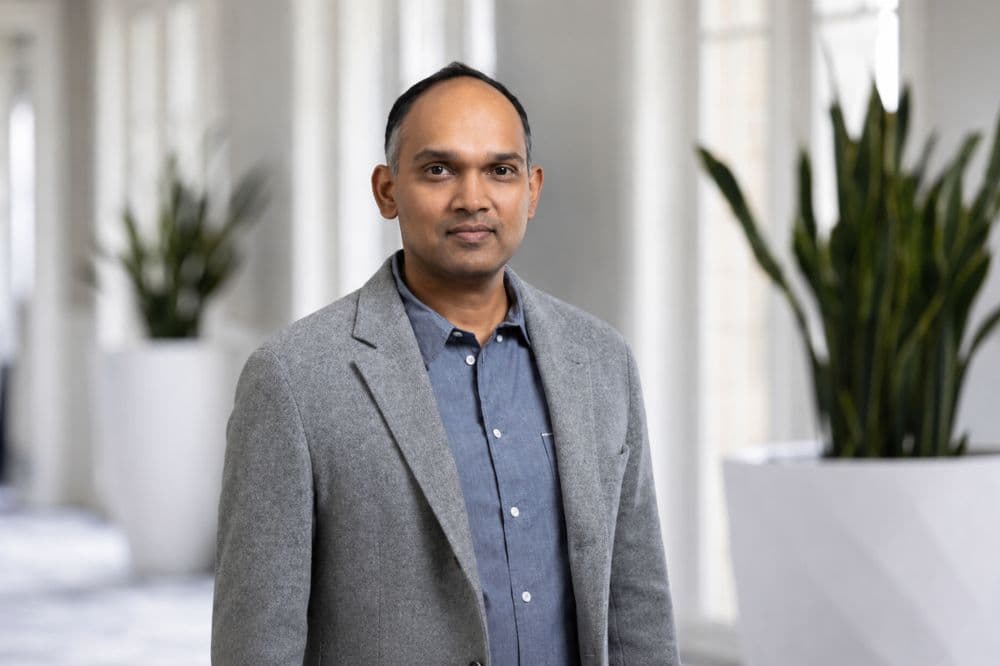
Arvind Mohan
Chief Executive Officer and Board Member of Kiavi.
Arvind serves as Chief Executive Officer and Board Member of Kiavi, one of the nation’s largest private lenders to residential real estate investors (REIs) with over $30B in funded loans.
Arvind has nearly 20 years of leadership experience in residential real estate and investment banking. Prior to being named CEO, he served as Kiavi’s Chief Operating Officer overseeing the Software Engineering, Product, Risk, Business Operations, Capital Markets, and Mortgage Operations functions. Before joining Kiavi in 2016, Arvind spent 10+ years in the fixed income division at Barclays overseeing teams in the securitized products group.
A unique C-suite executive with a background in both engineering and real estate finance, Arvind has played an instrumental role in Kiavi becoming a top lender to real estate investors through its unique application of technology, data and AI. He was recently named a 2023 Tech Trendsetter by HousingWire, which honors the 50 most-innovative leaders making a demonstrable impact on driving the housing industry forward through technology innovation. Arvind holds a B.S. and M.S. in Computer Engineering from Carnegie Mellon University. He resides in the San Francisco Bay Area with his wife and two children.
To learn more about Arvind and/or Kiavi visit www.Kiavi.com