


|
Getting your Trinity Audio player ready...
|
August 25, 2026.
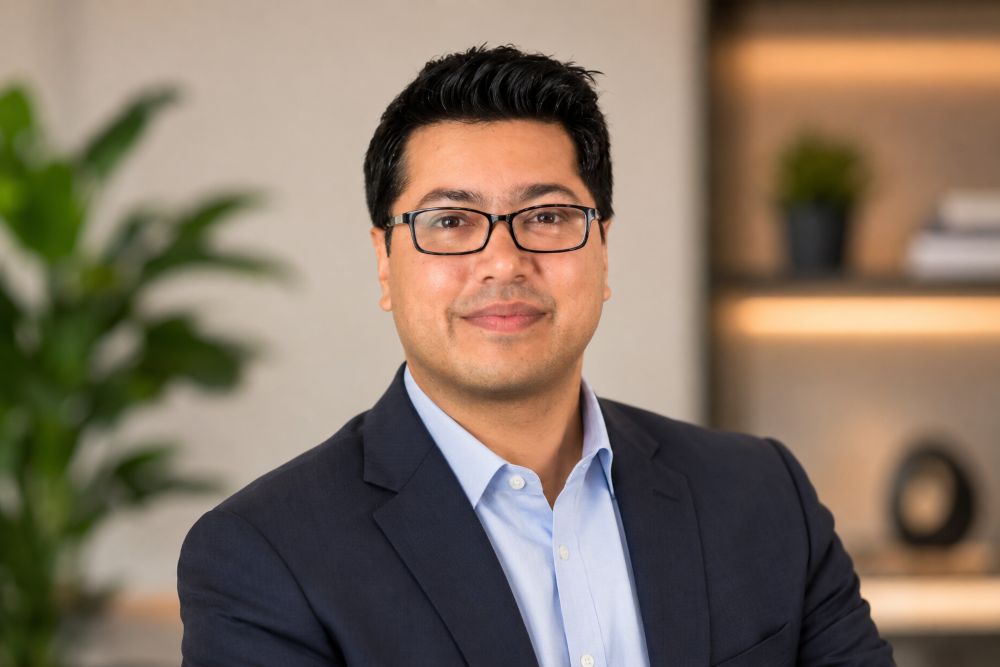
For more than four decades, The Mortgage Office (TMO) has been one of the most established technology platforms serving private lenders in the United States and beyond. Under newly appointed CEO Sourabh Chirimar, the company is preparing for something significantly bigger than its next software release.
The strategy emerging at TMO combines several elements that are rapidly reshaping private lending: artificial intelligence, proprietary data, market intelligence, automation, and a broader approach to the entire lending lifecycle.
The recent acquisition of SFR Analytics offers perhaps the clearest indication of where the company is heading. Rather than remaining simply the system lenders use to originate and service loans, Chirimar envisions TMO becoming an end-to-end operating platform capable of helping lenders identify risk earlier, understand borrowers more deeply, make better decisions, and ultimately become more strategic partners to their customers.
That transformation is already underway.
Building on that acquisition, TMO recently launched TMO Analytics, a new market intelligence platform that combines aggregated, anonymized loan performance data from The Mortgage Office with SFR Analytics’ broader market data.
In this exclusive conversation with The Elite Officer, Chirimar discusses his path to becoming CEO, the philosophy that shaped his leadership style, why TMO acquired SFR Analytics, how artificial intelligence is already changing the way the company builds technology, and the launch of a new analytics platform that he believes will give lenders access to intelligence that has not previously been available in this form.
From Google to Leading The Mortgage Office – The Experience That Shaped His Leadership Philosophy
Uriel Fleicher: Congratulations on becoming CEO of The Mortgage Office. Every leadership journey has defining moments. Looking back, what experiences or turning points shaped you into the leader you are today?
Sourabh Chirimar: There have been many, but one thing that has consistently defined my career is that I’ve taken risks, especially when things were going well. Most people, when they’re doing well, keep going in the same direction. For me, when I reach a comfort zone, I start questioning what I’m doing. I remember being offered an opportunity for advancement at Google. It was the kind of progression people normally want. But instead of immediately accepting it, it caused me to reflect on what I actually wanted from my career. I asked myself: What genuinely excites me? What do I enjoy doing?
I came up with two answers. One is watching people grow. I love seeing someone who was in one place two years ago develop new skills, take on greater responsibility, make a bigger impact, improve their life and become a different person professionally. The second is innovation. I love being at the edge of something new—building something from zero to one, creating something that didn’t exist before.
At the time, I realized that simply becoming a director or VP wasn’t necessarily what I was pursuing. Those things weren’t what made me excited to wake up in the morning. So I turned down that path and moved to another team where I could build something from the ground up. That decision taught me something about myself that has stayed with me ever since. Every person is driven by something unique to them, but we often end up pursuing the things everyone else pursues: the title, the hierarchy, the promotion.
I think the more important question is: What makes you excited to wake up on Monday morning? You could be making millions of dollars, but if you’ve moved too far away from that answer, it may still not be enough.
That’s also something I talk about when I’m helping people with career development at TMO. The question shouldn’t only be, “How do I get my next promotion?” It should also be, “What is the work I actually want to wake up and do?”
The Vision: From Loan Management Software to a Lending Operating System
Uriel Fleicher: Now that you’re leading the company, I imagine you have a clear vision of where you want to take The Mortgage Office. Where do you see TMO three to five years from now?
Sourabh Chirimar: I think there are two parts to answering that. First, you have to understand what The Mortgage Office already is today. TMO is more than 45 years old. The company started in 1978—and even then, it was building loan management software. Think about how many technology cycles have happened since then. Today, we have approximately 1,100 customers and more than $200 billion in loans serviced annually through our platform. We work with private lenders that may have 25 loans and want to become much larger, as well as multibillion-dollar lenders and specialized lenders with tens of thousands of loans. Our customers operate across more than 15 countries. Private lending is our primary market, but we also have a substantial affordable-housing business serving government agencies, counties, state organizations, HFAs and CDFIs. So the breadth of TMO today is much larger than many people realize.
Now, where can it go? I see two major components to the vision. The first is for TMO to become the platform—or operating system—for lenders. We’re already involved across a large portion of the lifecycle, from loan application to origination to servicing. But we see that expanding further. Think about prospecting, market intelligence, managing your data cloud, delinquencies, property management, servicing, integrations with other vendors—essentially creating a core platform around which lenders can operate their businesses. The second part is equally important. We want to build that future on an AI-native infrastructure, rather than simply a traditional SaaS infrastructure.
From Recording Transactions to Anticipating Decisions
Uriel Fleicher: For many years, lenders have viewed software primarily as the place where they process or record what is happening with a loan. Does that change under this vision?
Sourabh Chirimar: Absolutely. Today, imagine a borrower requests a construction draw. You use your software, you run an inspection, confirm that the work was completed, approve the draw and disburse the money. The software is essentially the place where that process gets recorded and executed. I believe we’re going to become much more than that.
The system should be able to say: Why hasn’t this borrower requested a draw yet? Maybe you should call them. Or perhaps we’re seeing information that suggests this borrower may be experiencing trouble on another loan somewhere else. Maybe you should check their financial health now rather than waiting until a payment or payoff becomes a problem. That’s a fundamentally different experience.
Every stage of the system can ultimately be supported by data and AI. You could have agents working in the background for you while humans remain responsible for the judgment and strategy. We want to empower lenders to do much more than simply operate as loan factories.
Helping Lenders Become Advisors to Their Borrowers
Uriel Fleicher: What does that mean for the relationship between lenders and borrowers?
Sourabh Chirimar: I think the next evolution of our industry is that lenders become much more proactive and consultative with their borrowers. Private lending has a very high level of repeat business. Today, a lender’s fundamental responsibilities include raising capital, managing cost of funds, deploying capital and managing risk. Those fundamentals aren’t going away.
But what if lenders could look across their portfolios and understand much more clearly what successful borrowers are doing? What if they could use that information to guide their customers? AI can help us become more consultative with our lenders, and then enable lenders to become more consultative with their borrowers. I think that’s going to fundamentally change the relationship.
Why TMO Acquired SFR Analytics: Data at the Center of TMO’s AI Strategy
Uriel Fleicher: One of your first major decisions as CEO was the acquisition of SFR Analytics. From everything you’ve described, it sounds like the acquisition is directly connected to this broader vision.
Sourabh Chirimar:We believe the company that builds the best AI products will ultimately be the one that understands how to work with data. When people think about AI today, they often think about a chatbot. You type something into ChatGPT or Claude and it gives you an answer.
The future is much bigger than that. It’s about how you use your own data together with market data and then empower AI to present better information and better decisions to humans. Loan officers and processors shouldn’t have to spend their time doing all of the grunt work required to find and organize that information. They should receive the intelligence and then use their judgment. SFR Analytics fits very naturally into that strategy.
Glenn and Phil have spent their careers working with data. SFR has built experience analyzing information across more than 40,000 private lenders and thousands of investors. Bringing that experience into TMO gives us an opportunity to help our customers understand borrowers and markets at a completely different level.
Better Information Before Underwriting Begins
Uriel Fleicher: Give me a practical example of what that could mean for a lender.
Sourabh Chirimar: Imagine someone applies for a loan and says, “I’ve completed 40 projects.” AI could review operating agreements, identify the LLCs associated with that borrower and say, “These appear to be the four LLCs connected with this person, and collectively we’re seeing six projects.” That’s incredibly valuable information. And you can go further. What are those LLCs doing? Are they making payments regularly? Are they behind? Do they typically complete their projects on schedule? Do they consistently request loan extensions?
The more information we can give a lender upfront, at the moment of application rather than deep into underwriting, the more powerful it becomes. There’s a very simple reason for that. This is an extremely competitive market. Once a lender enters underwriting and starts spending money on a transaction, there can naturally be a bias toward closing the loan. You’ve already invested time and resources. At that point, walking away becomes psychologically more difficult.
Your best opportunity to make the most objective decision is when the borrower first walks through the door. If we can provide substantially more intelligence at that stage, lenders have a much better chance of making the right decision. That’s one of the reasons SFR Analytics was such a compelling acquisition for us.
TMO’s Artificial Intelligence Strategy Is Already Underway
Uriel Fleicher: Let’s move specifically into artificial intelligence. You’ve described an AI-native future for TMO, but how much of this is already happening inside the company today?
Sourabh Chirimar: Quite a lot. Some of our best engineers are reaching a point where they’re not spending any of their time writing code. They’re reviewing code. Their role is increasingly focused on governance, security, architecture and making sure that everything the AI produces meets our standards. That’s an enormous shift. In our business, we can’t afford mistakes. Customer data must always be protected. So we’re building governance layers around AI.
We’re also using different AI engines to check each other’s work. For example, if one model generates code, we can have another AI model perform QA and review that code. The human engineers then operate at a higher level—reviewing, thinking, protecting the framework and making decisions.
AI Doesn’t Eliminate Opportunity—It Expands It
Uriel Fleicher: There is still a lot of anxiety around AI and employment. How do you see that playing out in lending?
Sourabh Chirimar: I’ll use our own company as an example. We’re using more AI today than we’ve ever used before, and at the same time, we have multiple roles open and we’re continuing to hire. Why? Because when productivity increases, opportunity also increases.
AI is quickly going from being an advantage that only certain companies use to something all of your competitors will eventually have. It has become the normal way businesses operate. I don’t see AI replacing people in lending operations. I see it making people dramatically more efficient and allowing them to focus on more complex decisions and opportunities.
They’ll spend more time thinking strategically, developing borrower relationships, managing portfolios, identifying new opportunities and creating new loan products. The roles may change, but opportunity doesn’t disappear.
Execution Goes to AI. Judgment Stays Human.
Uriel Fleicher: So what changes about the people lenders need to hire?
Sourabh Chirimar: Historically, across lending and software, companies have hired a lot of people primarily to execute processes. I think much of that execution will eventually be handled by AI. So why do you hire a person? You hire them for judgment. You hire them to think two steps ahead. You hire them for personal relationships. You hire them to understand information that may never be completely captured inside a database. AI can review an appraisal, analyze property values, project NOI, calculate DSCR and create a beautiful analysis around a deal. But when you sit across from a borrower, shake their hand and ask, “What is your plan? How do you want to grow your business? How are you thinking about your portfolio over the next three years?”—that’s a different kind of information.
Maybe the transaction sitting in front of you is perfect. Maybe the borrower has done an amazing job. But what happens if they’re planning to start five additional projects next month and run out of liquidity on project number six? You’re underwriting project number one, but project number six can still create a problem for you. Those are questions where human judgment and relationships become incredibly important. AI should free people to spend more time having those conversations.
What’s going away is the endless back-and-forth: “I need this document.” “This document isn’t signed.” “Why is there a $40,000 transaction on this bank statement?” AI can handle much of that. It becomes an assistant that allows the human being to become much more effective. But that also means the skill set lenders hire for will change. Being extremely good at following a process won’t be enough. Judgment becomes much more valuable.
A Six-Week Challenge Following the SFR Acquisition
Uriel Fleicher: You also mentioned that TMO is about to introduce a new product. How does that fit into everything we’ve discussed?
Sourabh Chirimar: There’s a story behind that. When I was at Google working in devices, Amazon acquired Whole Foods. I remember watching how quickly they started integrating their technology into the Whole Foods experience. I was amazed by the speed. It made an impression on me. So when we acquired SFR Analytics, I told the team: I want us to launch an integrated product in six weeks. And we’re doing it.
Introducing TMO Analytics
Uriel Fleicher: What exactly are you launching?
Sourabh Chirimar: It’s called TMO Analytics. We’re taking aggregated, anonymized data from TMO’s platform and combining it with SFR Analytics data. TMO has approximately 1,100 customers. Across the platform, we’re looking at more than 300,000 loans, with roughly 25,000 loans flowing through the system in a given month across our different lending segments. That creates an extraordinary dataset. Now imagine combining that information with SFR Analytics’ broader market intelligence. A lender could look at a ZIP code and begin evaluating risk using information that simply hasn’t been available in this form before.
Uriel Fleicher: There are already companies providing private lending data. What’s different about this?
Sourabh Chirimar: Most market data providers ultimately rely heavily on public information. They look at county records, for example. The problem is that public records are inherently delayed. Something happens today and it might not appear in the public record for a month or two or might never be reported. Our platform is operating every day. We can look at aggregated, anonymized activity that is current and accurate—including payment behavior that may be as recent as yesterday—and combine that with SFR Analytics’ market intelligence. That’s very different. If something is changing in a particular market or ZIP code, you don’t necessarily have to wait months for public records to reveal it. That’s information that nobody else has in the same way.
The Bigger Transformation Ahead
Uriel Fleicher: Listening to everything you’ve described, TMO Analytics seems like more than just another product. Is this really an example of the type of company you’re trying to build?
Sourabh Chirimar: The vision is bigger than simply building individual software features. We want to create an end-to-end platform where lenders have the tools, intelligence and AI support they need throughout the entire lifecycle. The goal isn’t to remove the lender from the decision. It’s the opposite.
We want to remove the work that prevents lenders from spending their time on the decisions where their experience matters most. AI handles more execution. Data provides better context. And people apply judgment. If we do that correctly, lenders can become more efficient, make better risk decisions and build much deeper relationships with their borrowers. That’s where I think the industry is headed—and that’s the opportunity we’re building toward at The Mortgage Office.
Uriel Fleicher: Sourabh, thank you very much for your time and for sharing your vision with us. It was a pleasure speaking with you.
Sourabh Chirimar: Thank you, Uriel. I really enjoyed the conversation and appreciate the opportunity to share where we’re headed.
Editor’s Note: This interview was conducted shortly before the launch of TMO Analytics.

Sourabh Chirimar
CEO of The Mortgage Office.
Sourabh Chirimar is the Chief Executive Officer at The Mortgage Office, the most trusted loan management platform purpose-built for private lenders. In his role as CEO, Sourabh drives the company’s overall strategic direction, operational execution, and market positioning, ensuring the organization is aligned around delivering exceptional value to customers. As Chief Executive Officer, he leads the development of solutions that help private lending professionals streamline complex workflows across origination, servicing, fund management, and construction management. With deep expertise in technology strategy, data-driven insights, and software innovation built over a career spanning product leadership and enterprise software, Sourabh brings a rare combination of executive vision and hands-on product discipline to his dual role.